- - -

Articles about Palestine

PFPA Delivering services in Gaza
17 April 2025

Our Emergency Response Efforts in Gaza

  Through the Palestinian Family Planning and Protection Association (PFPPA), the IPPF is implementing an emergency response to meet the sexual and reproductive health needs of women, girls, and vulnerable populations in Gaza. Our key initiatives include: · Emergency healthcare for pregnant women, including comprehensive prenatal and postnatal services. · Access to family planning methods for women amidst the ongoing healthcare collapse. · Psychosocial support for survivors of gender-based violence, which significantly increases during conflicts. · Distribution of essential health supplies, such as sanitary products, emergency medications, and primary healthcare resources. · Protection for healthcare workers to ensure a safe environment that allows them to continue providing critical services. Challenges We Face in Gaza The ongoing crisis presents several significant challenges: 🔹 Targeting of healthcare facilities has resulted in the destruction of medical centers and obstructed patient access to necessary care. 🔹 Severe shortages of medicines and medical supplies due to the blockade on the region. 🔹 Movement restrictions that hinder the ability of patients and healthcare workers to safely access health facilities. 🔹 Increased rates of sexual violence and gender-based violence due to the unstable environment. Our Call to the International Community We urge the international community to advocate for: 🔹 Immediate and unobstructed delivery of medical and humanitarian aid to Gaza. 🔹 Protection of hospitals and healthcare facilities to ensure they are not targeted during the conflict. 🔹 Creation of a secure environment for healthcare workers to fulfill their humanitarian duties. 🔹 Access for women and girls to sexual and reproductive health services, recognized as a vital component of humanitarian aid. Urgent Call for Humanitarian Assistance Given the catastrophic impact of the escalation on Gaza's residents due to ongoing Israeli blockade and occupation, we demand the unrestricted flow of humanitarian aid throughout Gaza. We call for the protection of civilians in Palestine and Israel and ensure their access to medical services in accordance with international humanitarian law. We stand in solidarity with calls for an immediate ceasefire between Israel and Hamas, advocating for a pathway toward just and lasting peace. Crisis Response Initiatives The IPPF works closely with local partners to ensure health services reach all affected individuals, focusing on: · Protecting healthcare workers to guarantee the ongoing provision of sexual and reproductive healthcare. · Delivering emergency medical care, including sexual and reproductive health services. · Supporting victims and survivors of gender-based violence. We remain dedicated to providing urgent humanitarian aid to those in need and will keep this page updated with developments in the situation. Impact of the Crisis on Women's and Girls' Health Humanitarian crises significantly affect the sexual and reproductive health of women and girls. In conflict situations, there is a rise in sexual violence, forced marriages, and unplanned pregnancies due to the lack of essential health services. The collapse of healthcare systems leads to inadequate care during pregnancy and childbirth, endangering both mothers and children.   Does IPPF Provide Humanitarian Response in Gaza? Yes, in partnership with the Palestinian Family Planning and Protection Association (PFPPA), we offer critical sexual and reproductive health services, including prenatal and postnatal care, mental health services, and support for survivors of gender-based violence. How Do Humanitarian Crises Affect Sexual and Reproductive Health? Before the current escalation, Palestine’s healthcare system already suffered from funding and resource shortages due to occupation and movement restrictions. This directly impacted access to reproductive health services, maternal care, and family planning methods. Addressing Gender-Based Violence Through Health Services Yes, we provide direct support for survivors of sexual violence and gender-based violence, including psychological support, healthcare, safe shelters, and legal assistance when necessary. How Does IPPF Respond to Reports of Sexual Violence ? We condemn all forms of sexual violence and reaffirm our commitment to defending survivors' rights, ensuring that all violations are thoroughly investigated, and perpetrators are held accountable according to international law. IPPF's Global Reach: Serving 145 Countries Operating in 145 countries means that the IPPF provides sexual and reproductive health services to millions worldwide, especially in conflict-affected areas and humanitarian crises where these services are urgently needed.                                           Voices from the Field "Palestinians are systematically deprived of sexual and reproductive healthcare. Our healthcare system is constantly targeted and drained by the occupation; the more it deteriorates, the more women and girls suffer in realizing their basic health rights."  Amal Awadallah, Executive Director of the Palestinian Family Planning and Protection Association (PFPPA) "As a healthcare worker and a Palestinian woman, I live in constant fear for my life and my family's safety. However, I cannot abandon my mission to provide health services to women, as they need us more than ever." — Wafa Abu Hashish, Healthcare Worker, Palestinian Family Planning and Protection Association (PFPPA)

CAPTURE
13 December 2022

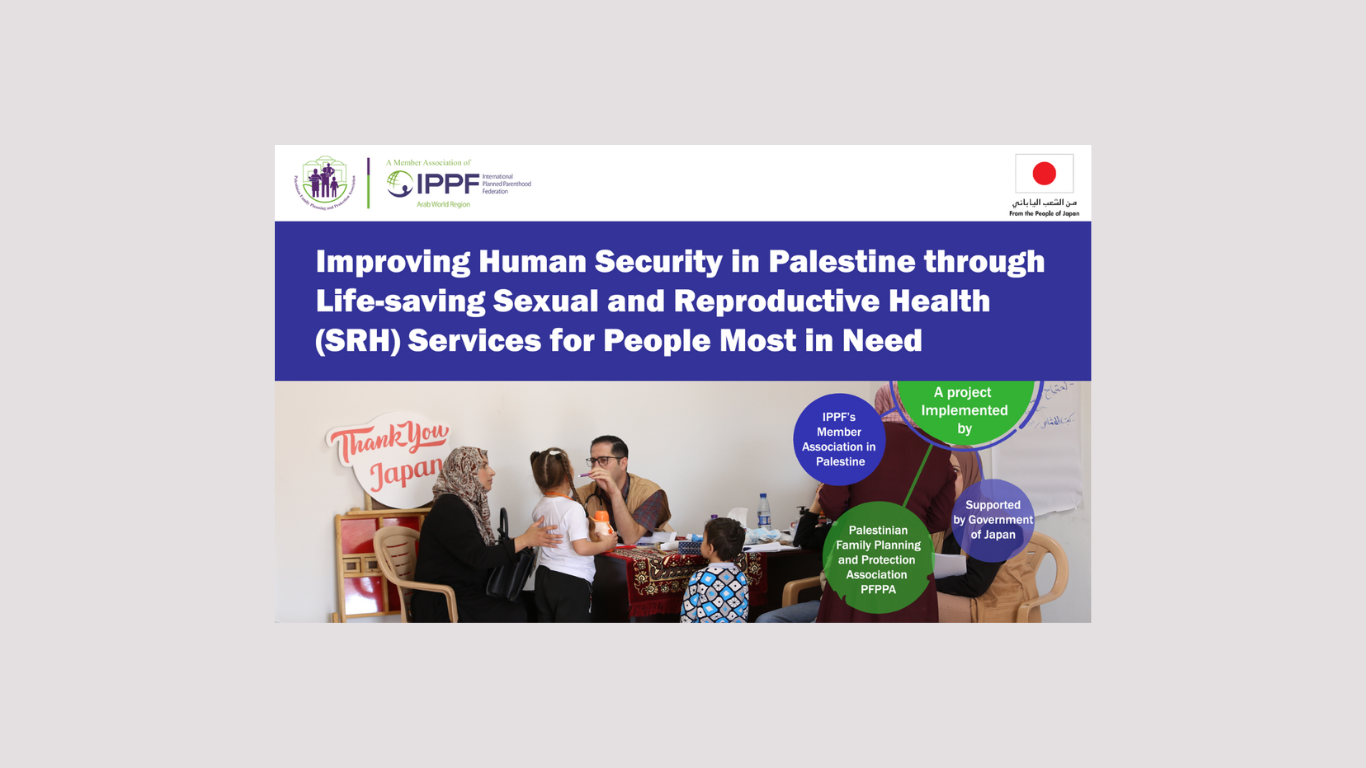
Improving Human Security in Palestine through Life-saving SRH Services for People Most in Need

"Improving Human Security in Palestine through Life-saving Sexual and Reproductive Health (SRH) Services for People Most in Need" is a project implemented by IPPF AWR’s Member Association in Palestine- Palestinian Family Planning and Protection Association (PFPPA) supported by Government of Japan.   18,537 women and youth have received high quality SRHR and GBV services through 5 PFPPA clinics so far.   PFPPA launched the project in March 2022. The project’s goal is to make sure that SRH services and rights (SRHR), including sexual and gender-based violence (SGBV) services are promoted and made accessible to vulnerable and underserved Palestinian women and girls in Gaza and the West Bank.

IPPF Japan Trust Fund
30 March 2017

Japan Trust Fund

The Japan Trust Fund (JTF) represents a visionary partnership that began in 2000 between the Government of Japan and IPPF. Together, we invest in programmes that prioritize health equity, gender equality, and human security for all. Traditionally a driving force behind IPPF's efforts to support the integrated HIV prevention programmes of our Member Associations in Africa and Asia, JTF has adjusted to reflect changing global health priorities. We attach importance to universal access to sexual and reproductive health and rights - an essential contributor to universal health coverage and the global development goals.     These projects have transformed the lives of people most vulnerable to HIV and high risk of maternal and child mortality. Equally, it ensures that as a donor, the GOJ’s response to HIV remains people-centred and contributes to human security.      

Palestinian Family Planning and Protection Association (PFPPA)

Established in Jerusalem in 1964, the Palestinian Family Planning and Protection Association (PFPPA) is locally registered as an independent, non-profit and non-governmental associations with its headquarter office being in Jerusalem.

According to PFPPA’s 2016- 2022 Strategic plan, it aims to:

  • Modify policies and decisions to respect Sexual Reproductive Health Rights (SRHR) and gender equity.
  • Provide information for people to make well informed decision and choices regarding their SRHR.
  • Deliver rights based, high quality integrated SRH services. 
  • Enhance the association is high performing, efficient, transparent and accountable.

PFPPA has service delivery points, located in the West Bank Areas of Ramallah, Bethlehem, Hebron and Halhoul, in addition to one in the Gaza Strip. Furthermore, and in cooperation with local partners PFPPA is also responsible for 5 safe spaces to provide Gender Based Violence (GBV) related services in the Jerusalem area.

PFPPA is known for the provision of comprehensive and diverse services, mainly related to:

  • Sexual and reproductive health services (including that related to GBV), particularly for girls and women.
  • Demand generation and mobile medical team activities reaching the most marginalized groups and areas. 
  • Raising awareness on SRH including comprehensive sexuality education (in and out of schools). 
  • Mobilizing activists and civil society actors to advocate for reforming laws that advance SRH and influence national policy.
  • Conducting applied national studies related to unmet SRH needs. 
  • Training for young leaders, staff, service providers and community leaders from local governmental and non-governmental organizations. 

In the past two years alone, PFPPA has been able to reach nearly 190,000 clients with over 850,000 services, over 80% being poor and vulnerable and over 85% being female also noting the vast majority being served within a humanitarian context.

PFPA Delivering services in Gaza
17 April 2025

Our Emergency Response Efforts in Gaza

  Through the Palestinian Family Planning and Protection Association (PFPPA), the IPPF is implementing an emergency response to meet the sexual and reproductive health needs of women, girls, and vulnerable populations in Gaza. Our key initiatives include: · Emergency healthcare for pregnant women, including comprehensive prenatal and postnatal services. · Access to family planning methods for women amidst the ongoing healthcare collapse. · Psychosocial support for survivors of gender-based violence, which significantly increases during conflicts. · Distribution of essential health supplies, such as sanitary products, emergency medications, and primary healthcare resources. · Protection for healthcare workers to ensure a safe environment that allows them to continue providing critical services. Challenges We Face in Gaza The ongoing crisis presents several significant challenges: 🔹 Targeting of healthcare facilities has resulted in the destruction of medical centers and obstructed patient access to necessary care. 🔹 Severe shortages of medicines and medical supplies due to the blockade on the region. 🔹 Movement restrictions that hinder the ability of patients and healthcare workers to safely access health facilities. 🔹 Increased rates of sexual violence and gender-based violence due to the unstable environment. Our Call to the International Community We urge the international community to advocate for: 🔹 Immediate and unobstructed delivery of medical and humanitarian aid to Gaza. 🔹 Protection of hospitals and healthcare facilities to ensure they are not targeted during the conflict. 🔹 Creation of a secure environment for healthcare workers to fulfill their humanitarian duties. 🔹 Access for women and girls to sexual and reproductive health services, recognized as a vital component of humanitarian aid. Urgent Call for Humanitarian Assistance Given the catastrophic impact of the escalation on Gaza's residents due to ongoing Israeli blockade and occupation, we demand the unrestricted flow of humanitarian aid throughout Gaza. We call for the protection of civilians in Palestine and Israel and ensure their access to medical services in accordance with international humanitarian law. We stand in solidarity with calls for an immediate ceasefire between Israel and Hamas, advocating for a pathway toward just and lasting peace. Crisis Response Initiatives The IPPF works closely with local partners to ensure health services reach all affected individuals, focusing on: · Protecting healthcare workers to guarantee the ongoing provision of sexual and reproductive healthcare. · Delivering emergency medical care, including sexual and reproductive health services. · Supporting victims and survivors of gender-based violence. We remain dedicated to providing urgent humanitarian aid to those in need and will keep this page updated with developments in the situation. Impact of the Crisis on Women's and Girls' Health Humanitarian crises significantly affect the sexual and reproductive health of women and girls. In conflict situations, there is a rise in sexual violence, forced marriages, and unplanned pregnancies due to the lack of essential health services. The collapse of healthcare systems leads to inadequate care during pregnancy and childbirth, endangering both mothers and children.   Does IPPF Provide Humanitarian Response in Gaza? Yes, in partnership with the Palestinian Family Planning and Protection Association (PFPPA), we offer critical sexual and reproductive health services, including prenatal and postnatal care, mental health services, and support for survivors of gender-based violence. How Do Humanitarian Crises Affect Sexual and Reproductive Health? Before the current escalation, Palestine’s healthcare system already suffered from funding and resource shortages due to occupation and movement restrictions. This directly impacted access to reproductive health services, maternal care, and family planning methods. Addressing Gender-Based Violence Through Health Services Yes, we provide direct support for survivors of sexual violence and gender-based violence, including psychological support, healthcare, safe shelters, and legal assistance when necessary. How Does IPPF Respond to Reports of Sexual Violence ? We condemn all forms of sexual violence and reaffirm our commitment to defending survivors' rights, ensuring that all violations are thoroughly investigated, and perpetrators are held accountable according to international law. IPPF's Global Reach: Serving 145 Countries Operating in 145 countries means that the IPPF provides sexual and reproductive health services to millions worldwide, especially in conflict-affected areas and humanitarian crises where these services are urgently needed.                                           Voices from the Field "Palestinians are systematically deprived of sexual and reproductive healthcare. Our healthcare system is constantly targeted and drained by the occupation; the more it deteriorates, the more women and girls suffer in realizing their basic health rights."  Amal Awadallah, Executive Director of the Palestinian Family Planning and Protection Association (PFPPA) "As a healthcare worker and a Palestinian woman, I live in constant fear for my life and my family's safety. However, I cannot abandon my mission to provide health services to women, as they need us more than ever." — Wafa Abu Hashish, Healthcare Worker, Palestinian Family Planning and Protection Association (PFPPA)

CAPTURE
13 December 2022

Improving Human Security in Palestine through Life-saving SRH Services for People Most in Need

"Improving Human Security in Palestine through Life-saving Sexual and Reproductive Health (SRH) Services for People Most in Need" is a project implemented by IPPF AWR’s Member Association in Palestine- Palestinian Family Planning and Protection Association (PFPPA) supported by Government of Japan.   18,537 women and youth have received high quality SRHR and GBV services through 5 PFPPA clinics so far.   PFPPA launched the project in March 2022. The project’s goal is to make sure that SRH services and rights (SRHR), including sexual and gender-based violence (SGBV) services are promoted and made accessible to vulnerable and underserved Palestinian women and girls in Gaza and the West Bank.

IPPF Japan Trust Fund
30 March 2017

Japan Trust Fund

The Japan Trust Fund (JTF) represents a visionary partnership that began in 2000 between the Government of Japan and IPPF. Together, we invest in programmes that prioritize health equity, gender equality, and human security for all. Traditionally a driving force behind IPPF's efforts to support the integrated HIV prevention programmes of our Member Associations in Africa and Asia, JTF has adjusted to reflect changing global health priorities. We attach importance to universal access to sexual and reproductive health and rights - an essential contributor to universal health coverage and the global development goals.     These projects have transformed the lives of people most vulnerable to HIV and high risk of maternal and child mortality. Equally, it ensures that as a donor, the GOJ’s response to HIV remains people-centred and contributes to human security.      

Palestinian Family Planning and Protection Association (PFPPA)

Established in Jerusalem in 1964, the Palestinian Family Planning and Protection Association (PFPPA) is locally registered as an independent, non-profit and non-governmental associations with its headquarter office being in Jerusalem.

According to PFPPA’s 2016- 2022 Strategic plan, it aims to:

  • Modify policies and decisions to respect Sexual Reproductive Health Rights (SRHR) and gender equity.
  • Provide information for people to make well informed decision and choices regarding their SRHR.
  • Deliver rights based, high quality integrated SRH services. 
  • Enhance the association is high performing, efficient, transparent and accountable.

PFPPA has service delivery points, located in the West Bank Areas of Ramallah, Bethlehem, Hebron and Halhoul, in addition to one in the Gaza Strip. Furthermore, and in cooperation with local partners PFPPA is also responsible for 5 safe spaces to provide Gender Based Violence (GBV) related services in the Jerusalem area.

PFPPA is known for the provision of comprehensive and diverse services, mainly related to:

  • Sexual and reproductive health services (including that related to GBV), particularly for girls and women.
  • Demand generation and mobile medical team activities reaching the most marginalized groups and areas. 
  • Raising awareness on SRH including comprehensive sexuality education (in and out of schools). 
  • Mobilizing activists and civil society actors to advocate for reforming laws that advance SRH and influence national policy.
  • Conducting applied national studies related to unmet SRH needs. 
  • Training for young leaders, staff, service providers and community leaders from local governmental and non-governmental organizations. 

In the past two years alone, PFPPA has been able to reach nearly 190,000 clients with over 850,000 services, over 80% being poor and vulnerable and over 85% being female also noting the vast majority being served within a humanitarian context.