
- - -

Articles about Somaliland

FGM: Religious Leaders declaration

During the inter-regional workshop organized in Nouakchott - Mauritania, from 4 to 5 July 2022, in cooperation between the Mauritanian Association for the Promotion of the Family, the International Planned Parenthood Federation/Arab World Regional Office and the "Center of Excellence" for the Elimination of Female Genital Mutilation, Nine religious leaders (Muslims and Christians) who attended the workshop from Arab and Africa regions, issued a declaration to end FGM as a harmful practice, and declare that there are no links between this practice and any religious requirement.

This declaration would be used as an advocacy tool by partners, IPPF MAs, civil society associations, religious leaders and policy makers to eliminate and criminalize FGM in countries affected by this harmful practice.

"Center of Excellence for the Elimination of FGM" Inauguration, Nouakchott, Mauritania

IPPF/AWR/Mauritania MA/center of excellence

In the event, the Mauritanian Minister of Health officially inaugurated the "Center of Excellence for the Elimination of Female Genital Mutilation" on July 6, 2022 in the Dar Al-Naim region, in the presence of a number of representatives of Mauritanian government institutions, representatives of UNFPA, UNICEF in Mauritania and civil society associations. This event witnessed wide coverage by national television and a number of other national and Arab media institutions.

The Center of Excellence for the Elimination of Female Genital Mutilation (FGM) emerges as a safe and reliable reference for women and girls who are victims or survivors of FGM on the one hand, and for IPPF member associations, especially in countries where this practice is widespread, on the other hand.

The center aims mainly to provide an ideal model to empower the IPPF member associations, especially those in countries that still practice FGM, through four main axes:

- Building the capacities of IPPF member associations, midwives, health professionals, service providers and volunteers, in the context of eliminating female genital mutilation, including educating adolescents and young people about the dangers of this practice; sharing experiences, best practices and experiences between member associations to eliminate this practice and learning from successes and ways to face challenges.

- Social and economic empowerment of FGM victims and survivors to improve their future by opening new horizons to empower and strengthen the capacities of female victims or survivors of this practice, and even female practitioners of female genital mutilation, so that these social and/or economic projects help them to abandon this practice.

- The quality of health care provided within this framework.

- Finally, advocacy based on evidence, research and evaluation ends with updating or adopting legislation and policies to end FGM.
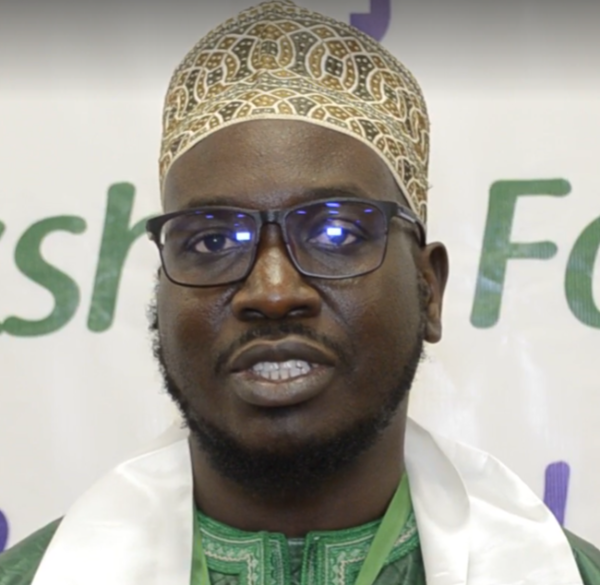
His Eminence Sheikh Musse Fall, Senegal

IPPF/AWR/MAURITANIA MA

Religious leaders must engage alongside doctors, alongside socio, socio-cultural arguments, through the various means available, namely Friday sermons, religious talks, but also through interventions in social networks. This, in order to eradicate female genital mutilation and to ensure that the population receives the right message specially: Islam does not encourage female genital mutilation, th ...

Declaration Arab Version

Somaliland Family Health Association

Somaliland has an estimated population of between 3.5 and 4 million people and one of the world’s highest maternal, neonatal and infant mortality levels. Female Genital Mutilation (FGM) is a major problem in Somaliland with a prevalence close to 98%. Literacy rate is around 18% and Unemployment is extremely high with most families receiving remittance from family members abroad to meet their basic needs.

Traditionally, the Somali people are nomadic. The infrastructure is very poor in terms of roads, human resources, water and electricity and that increase the difficulty in reaching a population on the move.

Nevertheless, with all of those issues, The Somaliland people have demonstrated that they are a resilient, self reliant, consensus building and democratic people with a strong entrepreneurial spirit.

Our Vision is a Somaliland in which every member is able and empowered to seek reproductive health information and services. And that those services are safe, available, accessible and affordable.

Our mission is to increase the number and quality of services the Somaliland people receive through direct service, advocacy campaigns, trainings and research.

Membership stands at around 100 Members representing parents, midwives, nurses, doctors, youth and religious Leaders.

Current Programs include counselling training for nurse/midwives, Every mother must receive birth spacing counselling ( pilot project at Edna Hospital), Islam and modern methods of birth spacing: Workshops with religious leaders, On campus events focusing on FGM, birth spacing, being a young woman and a mother, SRHR resource Library, HIV/AIDS: getting to zero in Somaliland.

Partnerships are with the Ministry of Health, Ministry of Religious Affairs and Endowment,  Ministry or Social Affairs and Labour, Edna Adan University Hospital, SOLNAC – Somaliland National Aids Commission, SLNMA – Somaliland Nursing and Midwifery Association, PSI International and with UNFPA. 


FGM: Religious Leaders declaration

During the inter-regional workshop organized in Nouakchott - Mauritania, from 4 to 5 July 2022, in cooperation between the Mauritanian Association for the Promotion of the Family, the International Planned Parenthood Federation/Arab World Regional Office and the "Center of Excellence" for the Elimination of Female Genital Mutilation, Nine religious leaders (Muslims and Christians) who attended the workshop from Arab and Africa regions, issued a declaration to end FGM as a harmful practice, and declare that there are no links between this practice and any religious requirement.

This declaration would be used as an advocacy tool by partners, IPPF MAs, civil society associations, religious leaders and policy makers to eliminate and criminalize FGM in countries affected by this harmful practice.

"Center of Excellence for the Elimination of FGM" Inauguration, Nouakchott, Mauritania

IPPF/AWR/Mauritania MA/center of excellence

In the event, the Mauritanian Minister of Health officially inaugurated the "Center of Excellence for the Elimination of Female Genital Mutilation" on July 6, 2022 in the Dar Al-Naim region, in the presence of a number of representatives of Mauritanian government institutions, representatives of UNFPA, UNICEF in Mauritania and civil society associations. This event witnessed wide coverage by national television and a number of other national and Arab media institutions.

The Center of Excellence for the Elimination of Female Genital Mutilation (FGM) emerges as a safe and reliable reference for women and girls who are victims or survivors of FGM on the one hand, and for IPPF member associations, especially in countries where this practice is widespread, on the other hand.

The center aims mainly to provide an ideal model to empower the IPPF member associations, especially those in countries that still practice FGM, through four main axes:

- Building the capacities of IPPF member associations, midwives, health professionals, service providers and volunteers, in the context of eliminating female genital mutilation, including educating adolescents and young people about the dangers of this practice; sharing experiences, best practices and experiences between member associations to eliminate this practice and learning from successes and ways to face challenges.

- Social and economic empowerment of FGM victims and survivors to improve their future by opening new horizons to empower and strengthen the capacities of female victims or survivors of this practice, and even female practitioners of female genital mutilation, so that these social and/or economic projects help them to abandon this practice.

- The quality of health care provided within this framework.

- Finally, advocacy based on evidence, research and evaluation ends with updating or adopting legislation and policies to end FGM.

His Eminence Sheikh Musse Fall, Senegal

IPPF/AWR/MAURITANIA MA

Religious leaders must engage alongside doctors, alongside socio, socio-cultural arguments, through the various means available, namely Friday sermons, religious talks, but also through interventions in social networks. This, in order to eradicate female genital mutilation and to ensure that the population receives the right message specially: Islam does not encourage female genital mutilation, th ...

Declaration Arab Version

Somaliland Family Health Association

Somaliland has an estimated population of between 3.5 and 4 million people and one of the world’s highest maternal, neonatal and infant mortality levels. Female Genital Mutilation (FGM) is a major problem in Somaliland with a prevalence close to 98%. Literacy rate is around 18% and Unemployment is extremely high with most families receiving remittance from family members abroad to meet their basic needs.

Traditionally, the Somali people are nomadic. The infrastructure is very poor in terms of roads, human resources, water and electricity and that increase the difficulty in reaching a population on the move.

Nevertheless, with all of those issues, The Somaliland people have demonstrated that they are a resilient, self reliant, consensus building and democratic people with a strong entrepreneurial spirit.

Our Vision is a Somaliland in which every member is able and empowered to seek reproductive health information and services. And that those services are safe, available, accessible and affordable.

Our mission is to increase the number and quality of services the Somaliland people receive through direct service, advocacy campaigns, trainings and research.

Membership stands at around 100 Members representing parents, midwives, nurses, doctors, youth and religious Leaders.

Current Programs include counselling training for nurse/midwives, Every mother must receive birth spacing counselling ( pilot project at Edna Hospital), Islam and modern methods of birth spacing: Workshops with religious leaders, On campus events focusing on FGM, birth spacing, being a young woman and a mother, SRHR resource Library, HIV/AIDS: getting to zero in Somaliland.

Partnerships are with the Ministry of Health, Ministry of Religious Affairs and Endowment,  Ministry or Social Affairs and Labour, Edna Adan University Hospital, SOLNAC – Somaliland National Aids Commission, SLNMA – Somaliland Nursing and Midwifery Association, PSI International and with UNFPA.